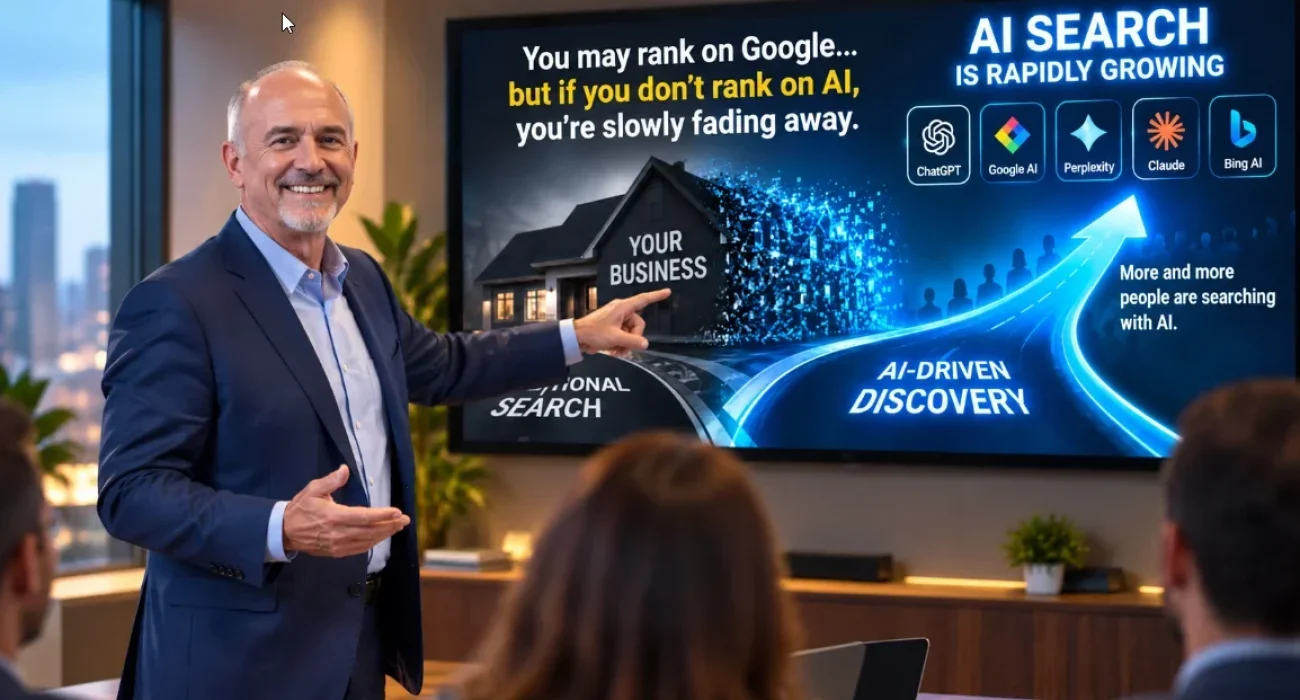
Imagine standing at the crossroads of a technological breakthrough—a moment when the old way of doing business gives way to a new era. Like the dawn of the internet or the spread of electricity, the AI revolution in online marketing is transforming how customers discover, interact, and buy. The choice business owners face right now is clear: adapt and lead, or risk being left behind. In this comprehensive guide, you’ll learn what the AI revolution means for your business, how history’s lessons reveal today’s opportunities, and actionable steps to keep your digital marketing ahead of the curve.
What You’ll Learn in This Comprehensive Guide to the AI Revolution for Online Marketing
-
How each technological revolution has shaped business leadership
-
Why the AI revolution for online marketing is a historic business opportunity
-
Steps to assess and achieve AI-readiness in your digital marketing strategy
-
Practical actions to ensure your business leads, not lags, in AI-powered discovery
Historical Lessons: From the Printing Press to the AI Revolution for Online Marketing

The Printing Press: How Information Accessibility Changed Content Creation
The invention of the printing press in the 15th century revolutionized information sharing. Before this technology, reproducing books and sources was laborious and accessible only to a privileged few. With printing, content creation shifted massively—making education and ideas available to the masses. Businesses that recognized this new market for printed materials thrived, as they could now create content and reach audiences they previously couldn’t reach. The lesson for today’s digital marketing landscape is clear: each time the cost and accessibility of information changes dramatically, it opens up new doors for those ready to step through them. The AI revolution in online marketing follows the same pattern, opening new ways for brands to engage, create relevant content, and serve customers on entirely new levels.
As content creation became more scalable and affordable, those who adapted quickly transformed their business models. They leveraged the press to distribute ideas, advertise products, and inform populations, bridging the gap between creators and consumers. Fast-forward to today, generative AI is giving similar unprecedented access to content creation in digital marketing. Marketers now harness AI tools to draft high-quality articles, analyze data at scale, and optimize their customer engagement, driving business outcomes that were once unimaginable.
Industrial Revolution: Mechanization and the Evolution of Business
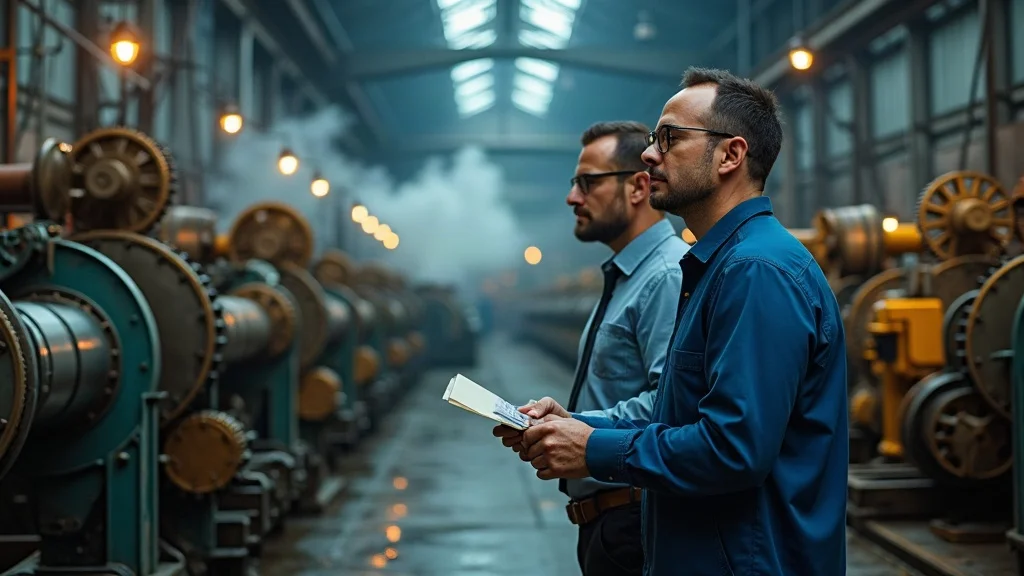
The Industrial Revolution replaced slow, manual processes with efficient machine-powered operations. This shift didn’t merely improve existing methods; it redefined entire industries. Traditional manufacturers who hesitated to embrace mechanization quickly found themselves outpaced by those who adopted new business models and machinery. In digital marketing, embracing AI tools and machine learning accelerates efficiency—helping marketers analyze large amounts of data, automate repetitive tasks, and turn insights into informed decisions. As with past revolutions, the winners are businesses agile enough to evolve, using innovation like generative AI and automated data analysis to deliver value at a lower cost and on a bigger scale.
Today’s AI-powered digital marketing landscape rewards those who welcome change. Mechanization once fueled the rise of new business titans; now, AI gives modern marketers the same potential edge. Whether it’s predicting customer behavior, creating tailored content, or automating social media posts, the capacity to adapt quickly remains the hallmark of future business leaders. The lesson: those who leverage new tools, whether looms or algorithms, shape the competitive landscape.
Automobile Age: Adapting to Transformative Technology
At the dawn of the 20th century, the arrival of the automobile upended transportation industries dependent on the horse and carriage. Businesses that ignored the shift lost ground rapidly; those that saw opportunity—like manufacturers who pivoted to car production or entered gas and maintenance services—thrived. The impact was so profound because it was not just about replacing a product, but transforming how society and commerce functioned. Today’s AI revolution for online marketing has similar transformative potential. Businesses that adjust their digital marketing to encompass generative AI, conversational search, and new modes of customer engagement gain advantages that go far beyond their competitors clinging to outdated practices.
Instead of merely updating existing offerings, visionary leaders recognize when the game has changed. Just as building a faster horse carriage was insufficient, marketers today must look beyond incremental improvements and embrace holistic digital transformation. Adapting your business model to the realities of AI-powered discovery—not simply tacking on AI tools—sets the stage for long-term growth in a changing marketplace.
Electricity: Reshaping Production and Customer Experience

When electricity began illuminating factories and homes, its value quickly surpassed that of previous lighting methods. Forward-thinking businesses redesigned workflows and products to exploit what electric power made possible: longer productive hours, new appliances, and safer, cleaner environments. Many competitors missed the mark by seeing electricity as just a better lamp, rather than an entirely new way of operating. Similarly, AI in digital marketing is about more than just automating posts or analytics. It enables marketers to personalize customer experiences, tailor content in real time, and deliver targeted messaging powered by customer behavior analysis and natural language processing.
As factories transformed their layouts to maximize electric-powered machines, smart marketers optimize websites for AI-based search and discovery. Investing in structured data, schema markup, and well-organized content helps both search engines and AI tools interpret your business for customers. The message is clear: using technology as a substitute for change leads to missed opportunities. True leaders redesign business strategies for the new era, just as forward-looking companies once reimagined their operations around electricity.
The Birth of Digital Marketing: Internet and Generative AI Foundations
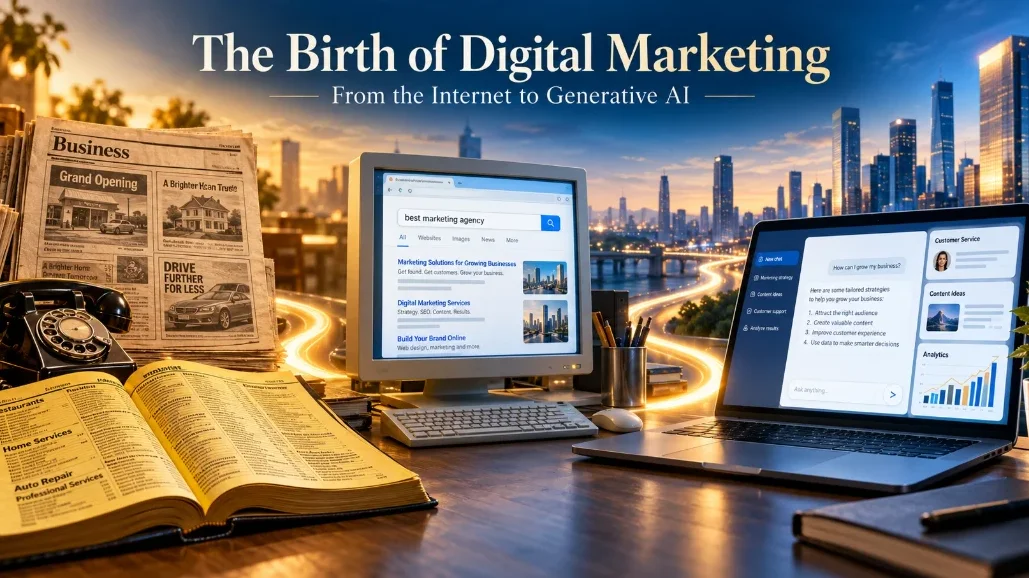
The rise of the internet upended traditional marketing—from print ads and the Yellow Pages to SEO-optimized websites and social media. Early adopters who built authoritative online presences captured most of the first wave of digital attention. Now, a new foundation is being laid with generative AI. Businesses leveraging AI technology to automate customer service, create content, and analyze customer data have an outsize advantage in the new world of digital marketing. The companies that move quickly to understand and use these tools—and present reliable, structured information—are the ones customers (and AI platforms) will notice first.
The shift from passive advertising to interactive, data-driven communication is underway. Businesses that combine strong digital strategies, AI tools, and ongoing optimization not only reach more customers, but also build trust and long-term loyalty. As with earlier revolutions, waiting too long risks losing visibility and relevance in a marketplace transformed by innovation.
To further enhance your understanding of how AI is actively shaping the digital marketing landscape, you may want to explore practical examples and case studies that demonstrate real-world applications of these technologies. For a deeper dive into actionable AI marketing strategies and their measurable impact, visit this resource on AI-driven marketing solutions.
Understanding the AI Revolution for Online Marketing: The New Frontier
How Generative AI Is Changing Digital Marketing and Content Creation
Generative AI is transforming how marketers create content and connect with audiences. Automated tools can draft compelling blog posts, generate social media posts, and even adapt language to fit distinct customer personas. This evolution isn’t about replacing human creativity; it’s about amplifying a marketer’s ability to produce relevant content at scale. As the AI revolution for online marketing matures, businesses that harness AI for content creation enjoy the dual benefits of speed and personalization—addressing customer questions, generating SEO-rich copy, and responding to shifting trends. Marketers can now use machine learning to optimize campaigns, improve targeting accuracy, and maintain their brand voice across channels.
Integrating generative AI frees marketing professionals from repetitive tasks and lets them focus on strategy, analysis, and creative direction. Whether automating email sequences, refining ad copy, or managing large-scale content calendars, AI is changing the nature and expectations of business communication. The best results come from combining AI’s scale with human insight and oversight. Together, they build a more agile, relevant, and informed digital marketing engine.
AI Tools and Their Impact on Customer Experience and Content Discovery
AI tools are rapidly enhancing the customer experience by providing faster, more personalized interactions. Language-powered virtual assistants can now answer customer service queries, suggest relevant content, and guide buyers through the decision process—all with greater accuracy than ever. For marketers, AI tools that analyze large amounts of data create an opportunity to refine targeting, segment audiences, and personalize outreach. The result is not just improved customer engagement, but higher satisfaction and loyalty through consistent, context-specific communication.
Sophisticated AI platforms synthesize learnings from social media, website visits, and customer data to anticipate needs and deliver tailored recommendations. These improvements in content discovery mean businesses that invest in structured digital information have a distinct edge—AI systems recognize it as authoritative. As content creation and content delivery merge, the best marketing strategies will blend automation, personalization, and a deep commitment to exceptional customer experiences.
Real-World Scenarios: AI’s Shift from Search Engines to Conversational Platforms

Today’s customers aren’t just typing keywords into search engines—they’re starting conversations with AI assistants like ChatGPT, Bing AI, and voice search platforms. These conversational AIs don’t simply list websites; they synthesize information, offer personalized recommendations, and simplify complex decisions. For example, instead of searching for “best chiropractor near me,” a user may ask an AI chatbot for advice tailored to their symptoms and preferences. Marketers must now optimize content for AI-driven discovery, not just search engines, ensuring their expertise is visible no matter how it’s requested.
This shift means your business information, structured data, and content must be clear, authoritative, and trustworthy. The AI revolution is less about gaming search rankings and more about building relationships with customers—wherever and however they seek solutions. Preparing for this new frontier is crucial for long-term relevance and growth.
Responsible AI in Digital Marketing: Trust and Transparency
“AI isn’t just the next marketing tool—it’s the next competitive standard.” – Industry Expert
With great power comes great responsibility. The rapid adoption of AI technology in digital marketing raises questions about ethics, bias, and transparency. Responsible AI practices include maintaining clear disclosure about AI-generated content, protecting customer data privacy, and ensuring human oversight in automated decision-making. Building trust through responsible AI is not just a legal necessity—it’s a cornerstone of customer engagement.
Forward-thinking companies prioritize transparency and accountability when adopting new AI tools. Customers want to know who (or what) they are interacting with and trust that their data is handled securely. By blending AI’s speed and efficiency with strong ethical practices, marketers can set themselves apart as leaders in a fast-changing environment. A foundation of trust ensures AI-driven interactions strengthen relationships rather than creating uncertainty.
AI Revolution for Online Marketing: Early Movers and Competitive Advantage
Marketers Use AI to Gain First-Mover Benefits
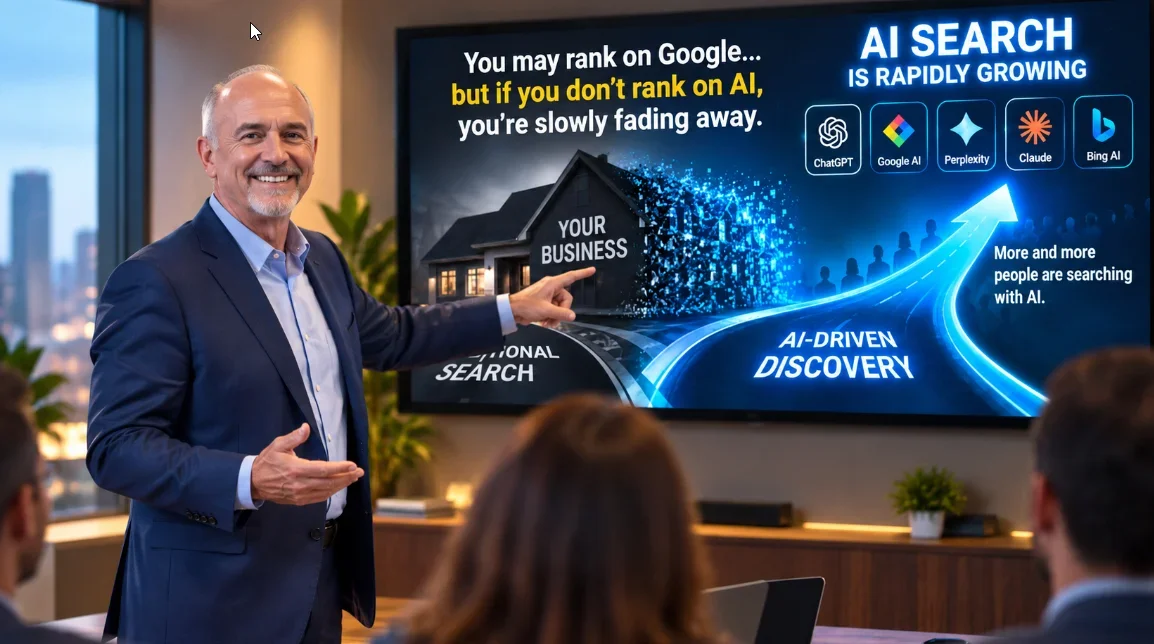
Early adopters of the AI revolution for online marketing are already reaping the benefits of first-mover status. By integrating AI tools into their digital strategies, they create more engaging marketing campaigns, improve customer service, and analyze data to identify opportunities long before competitors. Being a first mover isn’t only about adopting new technology ahead of others—it’s also about building expertise, authority, and trust early on. Marketers use AI to personalize customer experiences by delivering timely, relevant content and optimizing touchpoints across the entire customer journey.
This strategic use of AI isn’t a one-time play; it requires ongoing commitment to learning, monitoring, and adjusting to new customer expectations. Marketers who adapt their approaches as the technology evolves build resilient, forward-focused businesses. Those who hesitate risk falling irreversibly behind as the pace of innovation accelerates.
Avoiding Early Adopter Pitfalls in the AI Revolution for Online Marketing
Early adoption has its challenges. Jumping on every trending AI tool without a clear purpose can waste resources and fragment customer experiences. Savvy marketers avoid these pitfalls by remaining focused on meaningful business objectives: better engagement, more efficient operations, and enhanced customer loyalty. They prioritize tools and strategies that align with their brand mission and customer base, using data analysis to drive decisions instead of following hype. The key is to experiment intelligently while keeping the bigger picture in view.
By building adaptability into your marketing strategy—analyzing trends, monitoring results, and recalibrating as needed—you keep your business agile in a landscape shaped by constant AI innovation. Success is less about being first and more about being smart, prepared, and consistently responsive to new developments in digital marketing and content creation.
Strategic AI Integration for Sustainable Digital Marketing Growth
-
Analyze how your industry is using AI tools
-
Identify generative AI applications relevant to your business
-
Create an adaptable digital marketing roadmap
Integrating AI into your marketing doesn’t mean going all-in on every shiny software. The most successful businesses analyze how peers and competitors apply AI, identify the opportunities most relevant to their goals, and build a digital marketing roadmap tailored to their strengths. This approach supports long-term digital growth, helping companies consistently create content rooted in customer needs. Marketers use AI for what it does best—handling large-scale data analysis, customizing outreach, and automating routine workflows—while devoting human energy to creativity and insight.
A strategic, scalable plan ensures that your business can adapt as AI evolves. Investing in continuous learning, reviewing new opportunities, and maintaining an experimental mindset help marketing professionals stay ahead in the race for attention and relevance in digital marketing.
Becoming AI-Ready: Building a Foundation for the AI Revolution in Online Marketing

Establishing a Reliable Source of Truth for Digital Marketing Success
AI systems and search engines operate best when they encounter clear, accurate, and consistent information about your business. Establish a reliable “source of truth”—a master version of your business details, services, locations, and core messaging. Consistent branding and reliable data build human trust and help AI tools understand and present your expertise accurately. Businesses that proactively manage their information see stronger results in both traditional search and modern AI-powered discovery.
A centralized, authoritative source helps you keep websites, profiles, and multiple digital assets synchronized. As AI systems increasingly evaluate signals to recommend businesses, this alignment enables marketers to control how they are represented—cementing authority and credibility in a crowded digital marketing environment.
Optimizing Websites for AI-Powered Content Creation and Discovery
A modern website isn’t just a digital brochure—it’s the core of your online presence, optimized for both human visitors and AI-powered tools. Well-structured pages with targeted content, schema markup, and technical SEO prepare your site for the next wave of digital marketing innovation. AI tools crawl websites seeking clear explanations of what you offer, who you serve, and what sets you apart. Businesses that meet these needs with detailed, accessible content creation stay visible whether customers use traditional search engines or AI-driven platforms.
On-page optimization supports better AI indexing and improves discoverability. As AI instructions become more complex—pivoting from keyword search to nuanced queries and voice-powered requests—your website’s clarity and structure elevate your position in recommendation engines and conversational platforms.
Leveraging Structured Data for Enhanced Customer Experience
Structured data is the DNA of digital discoverability. Marketers who use schema markup, consistent business listings, and well-organized service pages make it easier for AI tools to interpret and present information to customers. Customer experience improves when data is accurate and easy to interpret—ensuring buyers find answers quickly and trust what they see. By investing in structured, machine-readable information, you position your business as the go-to source when AI platforms seek out authoritative, relevant answers for users.
This strategy not only amplifies your visibility across search engines but also future-proofs your brand as AI-driven discovery grows. Ultimately, structured data delivers a competitive edge by supporting both customer-facing channels and behind-the-scenes digital marketing optimization.
Implementing an Ongoing AI Marketing Strategy
Achieving AI-readiness is an ongoing process—not a one-time checklist. Monitor changes in search and discovery platforms, evaluate how new AI tools impact your industry, and stay agile in your response. Successful marketers plan for continuous updates: regularly publishing authoritative content, reviewing business information across the web, and adapting campaigns as technology evolves. This ongoing cycle of improvement ensures your brand remains relevant to both human customers and AI-driven platforms.
Futureproofing your business involves ongoing education, strategic investment, and a willingness to refine processes. Focus on building long-term, systemic readiness rather than relying on a single tool or trend. As the landscape shifts, businesses that maintain an adaptable AI strategy keep their leadership edge and consistently unlock new growth in digital marketing.
|
Key Components of AI Readiness in Online Marketing |
|
|
AI-Ready Attribute |
Why It Matters |
|---|---|
|
Clear brand messaging |
Ensures AI platforms and customers identify your unique value |
|
Consistent business information |
Improves trust and reduces confusion across digital channels |
|
Strategic, authoritative content |
Establishes expertise and boosts both search and AI visibility |
|
Technical optimization for AI tools |
Enables AI systems to accurately discover and interpret your business |
-
Clear brand messaging
-
Consistent business information
-
Strategic, authoritative content
-
Technical optimization for AI tools
Overcoming Barriers: Practical Steps for Business Owners Embracing the AI Revolution for Online Marketing
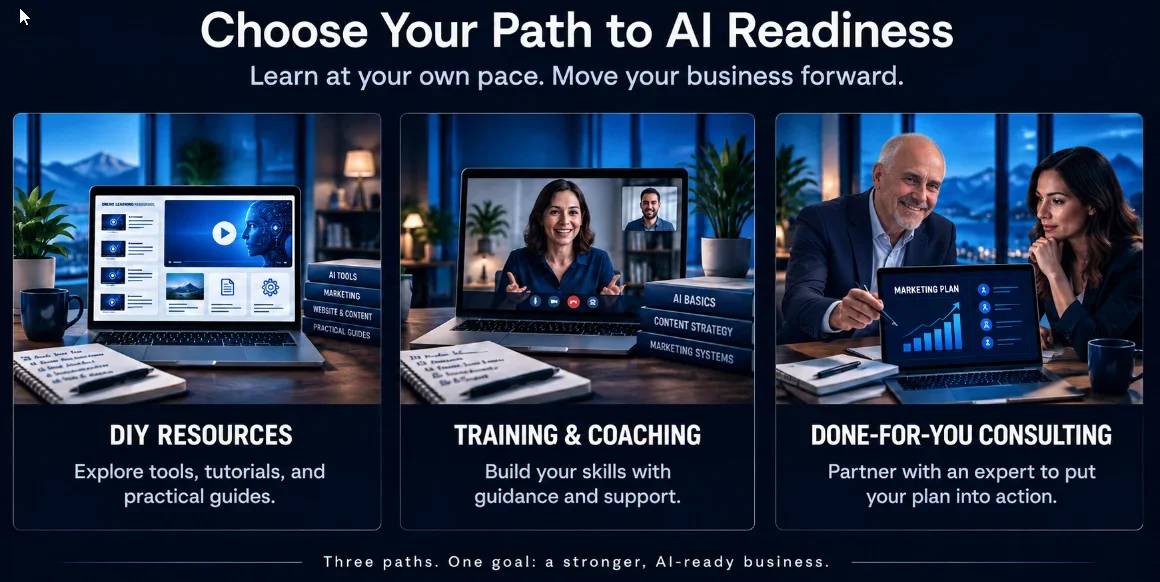
Learning at Your Own Pace: DIY, Coaching, or Consulting
You don’t need to be an AI expert to lead in the new age of digital marketing. Whether you prefer DIY learning, coaching, or hands-on consulting, the key is to start improving your business’s AI-readiness now. Some owners thrive with guided tutorials, others benefit from peer learning groups or personalized coaching, while many choose to partner with consultants for faster, more comprehensive outcomes. What matters most is taking action rather than waiting for the field to settle—every day counts as AI platforms continue shaping discovery, engagement, and customer experience.
Staying open to new information, experimenting with AI tools, and maintaining an adaptive mindset all help you stay competitive. As marketing professionals, committing to lifelong learning ensures you and your business will weather shifts and seize opportunities as AI technology evolves.
Evaluating the Effectiveness of AI Tools in Digital Marketing
Measuring ROI is crucial when integrating any new tool, and AI is no exception. Potential criteria include improvements in content-creation efficiency, audience-targeting accuracy, customer engagement rates, and conversion outcomes. Regularly analyze data to see how new AI tools affect your digital marketing outcomes, and stay flexible enough to pivot when needed. Not every tool will deliver universal value—success lies in choosing and optimizing those that serve your business goals and align with your customers’ needs.
Focus on tools that simplify workflows, free up creative and strategic capacity, and enhance the personalized delivery of relevant content. Through ongoing evaluation and adjustment, your business can ensure AI adoption consistently adds measurable value in an ever-evolving digital marketing landscape.
People Also Ask: AI Revolution for Online Marketing
How is AI revolutionizing digital marketing?
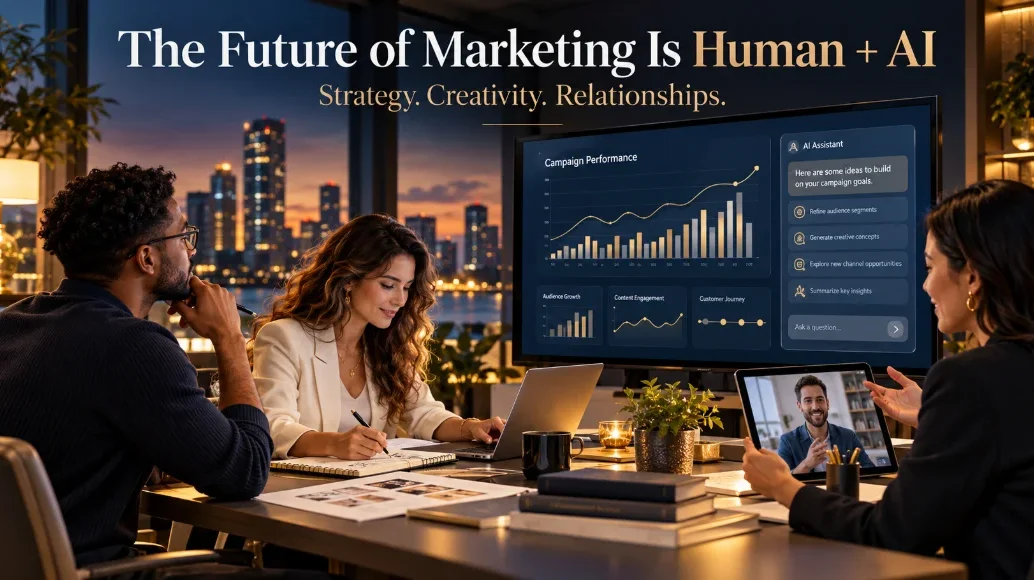
AI is transforming digital marketing by automating content creation, analyzing vast amounts of customer data, and personalizing customer experiences. Marketers use AI to target specific audiences, craft tailored messages, and optimize campaigns for better results. AI-powered tools handle repetitive tasks and complex data analysis, helping teams make informed decisions, improve customer engagement, and scale efforts more efficiently than ever.
Which 3 jobs will survive AI?
While AI is changing many digital marketing roles, jobs that emphasize human creativity, complex strategy, and relationship management remain less vulnerable. Specifically, marketing strategists who design campaigns and interpret AI insights, creative content creators who bring unique brand voices to life, and customer experience managers who personalize customer interactions are all expected to thrive even as AI tools become more widespread.
What is the 30% rule for AI?
The “30% rule” for AI usually refers to the idea that, for optimal outcomes, humans should be directly responsible for at least 30% of a process involving AI. In digital marketing, this means blending AI’s automation and data analysis strengths with human insight, oversight, and creative input—ensuring campaigns remain authentic, trustworthy, and strategically aligned with business objectives.
Is AI going to take over digital marketing?
AI will not fully replace digital marketing jobs, but it will fundamentally reshape them. Marketers who adapt and integrate AI tools strategically will enhance their productivity and results, while those who resist may become less effective. The future belongs to professionals who combine AI’s power with empathy, innovation, and a deep understanding of evolving customer behaviors.
Exploring the Future: Adapting Digital Marketing to AI Evolution
Future-focused digital marketers must monitor AI advancements and continually upgrade their skills. Rather than fearing disruption, see each new development as an opportunity to refine your strategy, experiment with creative content, and expand your understanding of AI-powered customer journeys. Sustained leadership comes from continuous learning, intentional adaptation, and a willingness to innovate as technology—and customer expectations—change.
Practical Examples: AI Tools Changing Digital Marketing
-
ChatGPT and conversational customer service
-
Generative AI for blog and ad content creation
-
AI-driven analytics for audience targeting
Key Takeaways: AI Revolution for Online Marketing and Business Leadership
-
The AI revolution for online marketing is a pivotal business transformation
-
History favors those who adapt early and strategically
-
Being AI-ready means more than installing tools—it’s about systemic change
-
A clear, actionable AI strategy will define tomorrow’s digital marketing leaders
Frequently Asked Questions: AI Revolution for Online Marketing
-
How do I assess if my business is ready for the AI revolution for online marketing?
Evaluate whether your online information is accurate, structured, and visible to both search engines and AI systems. Check if your website, listings, and content consistently reflect your brand and expertise. -
What are the best AI tools for digital marketing today?
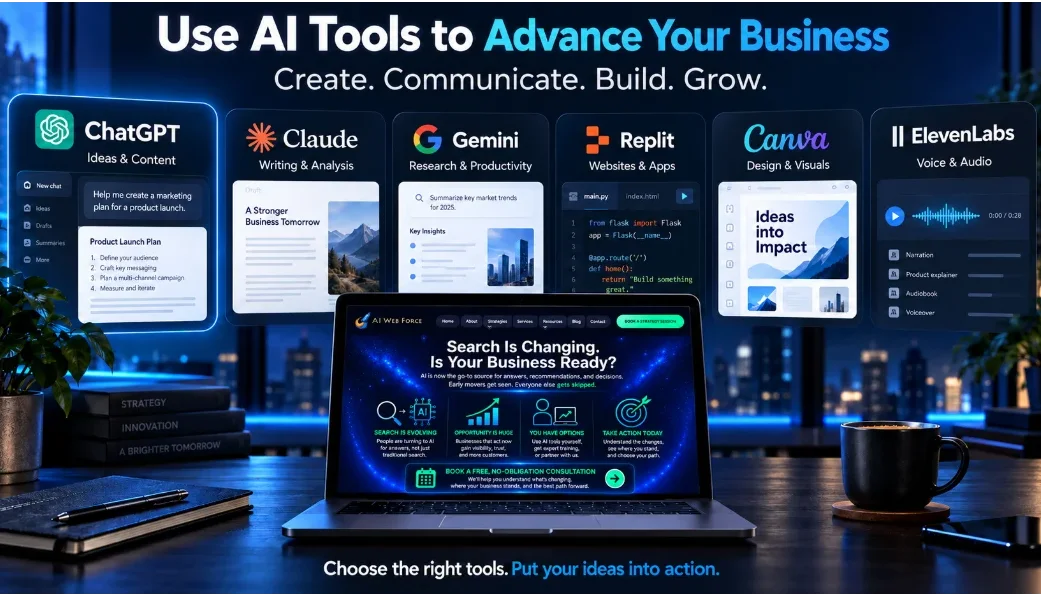
Some leading AI tools include ChatGPT for conversational content, Jasper for content creation, HubSpot for automated marketing, and Google Analytics for data-driven insights. The most effective tools align with your unique business needs. -
How does responsible AI affect customer trust in digital marketing?
Responsible AI builds customer trust by ensuring privacy, transparency, and human oversight in automated processes. When brands disclose AI use and protect user data, customers feel more confident in their interactions. -
Can small businesses benefit from generative AI in online marketing?
Absolutely. Generative AI levels the playing field, letting small businesses scale content creation, personalize campaigns, and analyze data more efficiently than ever, all while maintaining an authentic brand presence.
Final Thoughts: Preparing Your Business to Lead the Next Great AI Revolution for Online Marketing
Don’t Wait—Start Your AI Readiness Evaluation Today
Now is the time to act. Evaluate your current position in the AI revolution for online marketing, develop your readiness strategy, and build your business into an industry leader before the next wave of innovation crests.
As you look to the future of your digital marketing efforts, remember that staying ahead means continually seeking out new perspectives and advanced strategies. The journey to AI leadership is ongoing, and the most successful businesses embrace innovation and adapt to evolving technologies. For a broader perspective on how AI is shaping not just marketing but the entire digital business landscape, explore the latest insights and industry trends at AI Web Force. Discover how forward-thinking organizations are leveraging AI to redefine customer engagement, streamline operations, and unlock new growth opportunities—your next breakthrough could be just a click away.